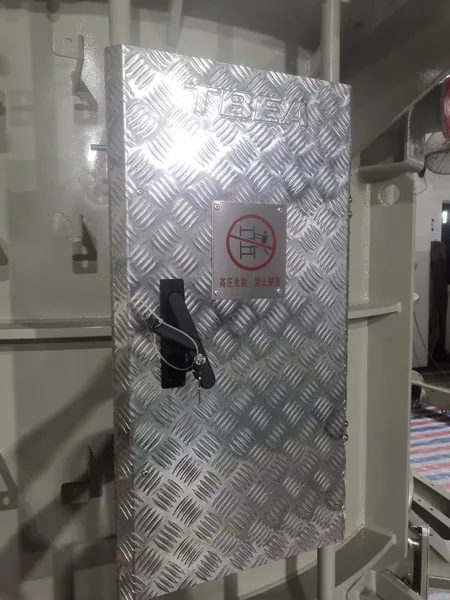
The curious 4-year-old daughter of my friend came to see our workshop and asked me…
Q: Hi, Uncle Chenn, what’s that HuuuuuuGE barrel for?
A: Can you guess?
Q: To put some soy?
A: No.
Q: To fill in some water?
A: No. That’s a shell for big power transformer. It’s called oil tank.
Q: Oil? Like cooking oil?
A: No, it is a magic oil. Named insulating oil. The transformer’s “heart” – wires and metal – is soaking in it. The oil keeps electricity from escaping and cools it down like a bodyguard.
A: What does the transformer do?
A: Electricity from the power plant is too strong. The transformer makes it gentle, then sends it to our house.
Q: So the lamp, rice cooker, and washing machine can work?
A: Exactly!
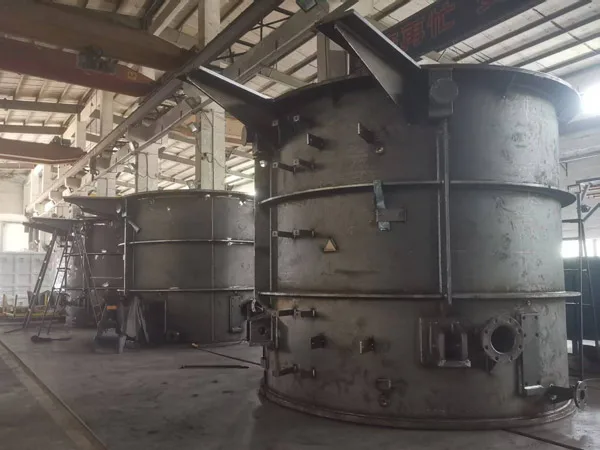
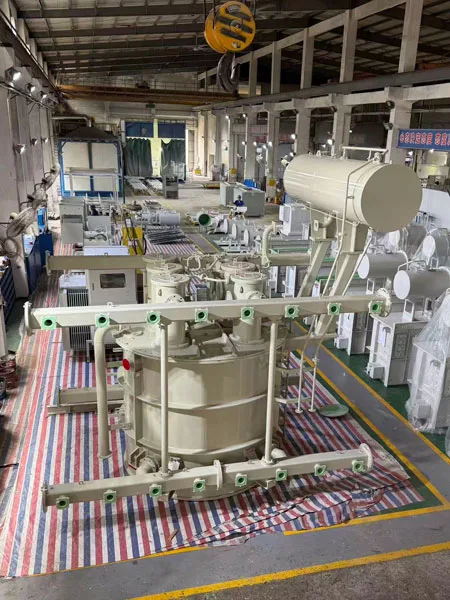
The little girl nodded with satisfaction, behaving like a “little grown-up”, and headed straight for the robot workstation where there were a lot of tanks being welded…
Yeah! Children’s stories are light-hearted, yet manufacturing such an oil tank for transformers (35kV, 60MVA) calls for an extremely rigorous, meticulous, precise and sophisticated production process.
There is no ordinary transformation – From Steel Plate to Armor: A Deep Integration of Materials and Precision Control
The 110kV transformer tank is by no means a mere welding exercise – it is a deep integration of materials science, precision engineering, and ultimate quality control. Our objective: zero leakage and zero deformation throughout a 30-year service life, even under vibration, thermal cycling, and C5H high-corrosion environments.
1. Material Selection & Cutting (Laying the Foundation)
Steel Grade: Q355R/Q235B high-quality structural steel, plate thickness 6–25mm.
Inspection: Spectrometer verification of chemical composition; strict control of elongation and impact energy (Akv ≥ 34J).
Cutting: Fine plasma cutting for thin plates (≤10mm) to minimize heat-affected zone and prevent wavy distortion.
2. Fit-Up & Tack Welding (Precision Alignment)
Accuracy: Dedicated jigs ensure flange face flatness deviation ≤2mm over full length.
Specification: Tack welds 20–30mm in length, evenly spaced; arc striking strictly prohibited at corners or stress concentration points.
3. Welding Process (The Structural Backbone)
Strategy: “Low heat input, multi-pass, multi-layer” welding with strict interpass temperature control.
Technique: Step-back and skip welding for stiffeners to control heat input and relieve residual stress.
Execution: Critical T-joints and long straight seams use CO₂ GMAW for root pass + SAW for cover pass for smooth finish; asbestos blanket slow cooling applied post-weld.
4. Internal Cleanliness (Eliminating Hidden Risks)
Slag Removal: Pneumatic chisels for spatter removal; industrial explosion-proof vacuum with nylon brushes for dead-corner cleaning.
Precision Rinse (High-Spec Orders): 60°C deionized water high-pressure spray to remove soluble salts, followed by hot-air drying to eliminate floating discharge risks.
5. Rigorous Testing (Dual Verification)
Kerosene Penetration Test: Limewater applied inside, kerosene outside; 2-hour observation—no yellow stains on white coating = pass.
Pneumatic Leak Test: 0.05MPa dry compressed air with soapy water inspection; 12-hour hold with pressure drop ≤3% = pass.
6. Coating System (C5H High-Corrosion Environment Protection)
Surface Preparation: Abrasive blasting to Sa2.5 level (near-white metal) to fully remove mill scale.
Coating System (C5H Grade): Epoxy zinc-rich primer (Zn ≥ 80%) + Epoxy mica-iron intermediate + Polyurethane/Fluorocarbon topcoat.
Thickness Requirement: Total NDFT ≥ 280μm (typically 80μm primer + 100μm intermediate + 100μm topcoat), with each layer subject to curing interval and film thickness inspection.
Edge Reinforcement: Bottom corner welds and lifting lug plates receive additional coating up to 320μm with pre-coating at edges and corners.
What we deliver is more than a steel container – it is a solemn commitment to grid safety, backed by data-recorded traceability throughout the entire manufacturing process.